Maticoopx 30 Egg Incubator
Maticoopx 30 Egg Incubator: Small to mid-size table top chicken egg incubator with many loyal owners. The Maticoopx 30 and the smaller Maticoopx 20 offer plenty of benefits, with few drawbacks. This is an easy-to-use, semi-automatic incubator.
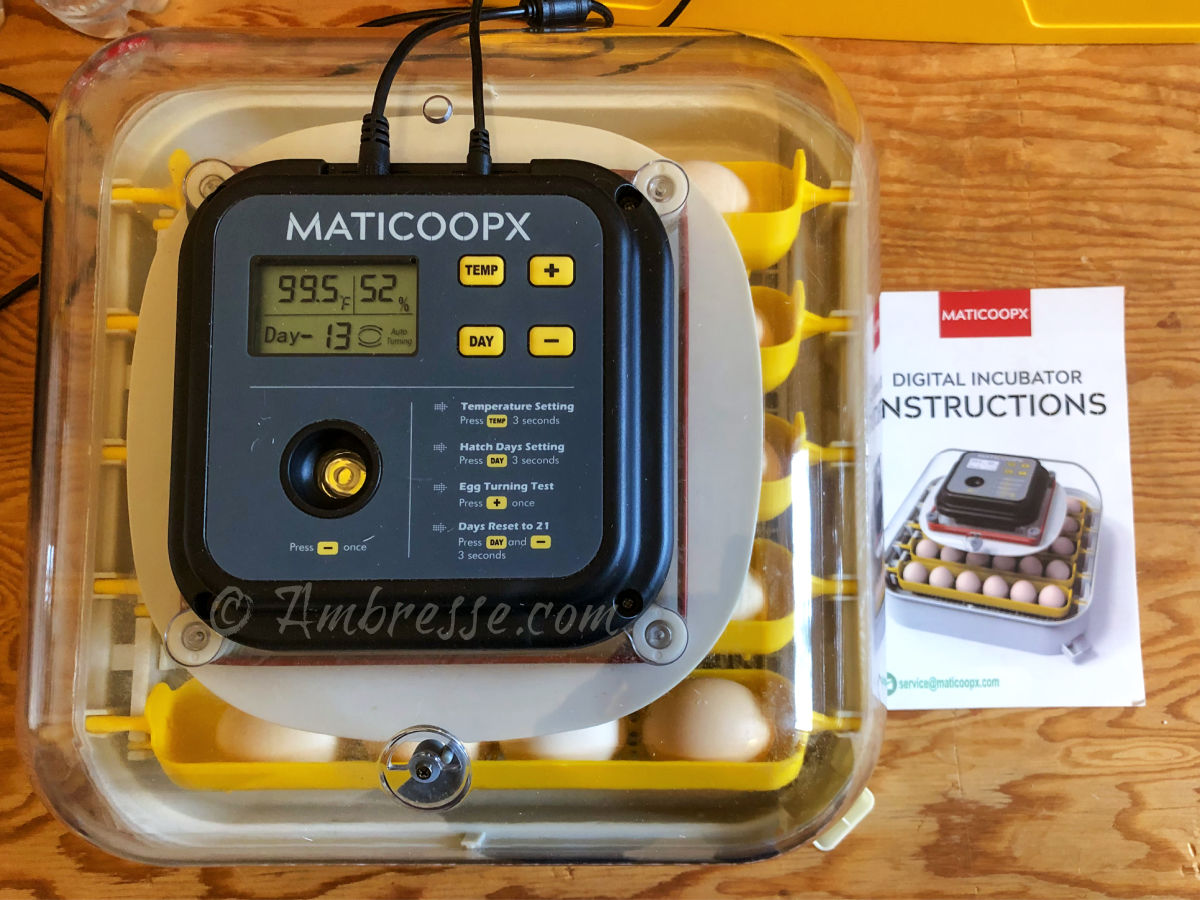
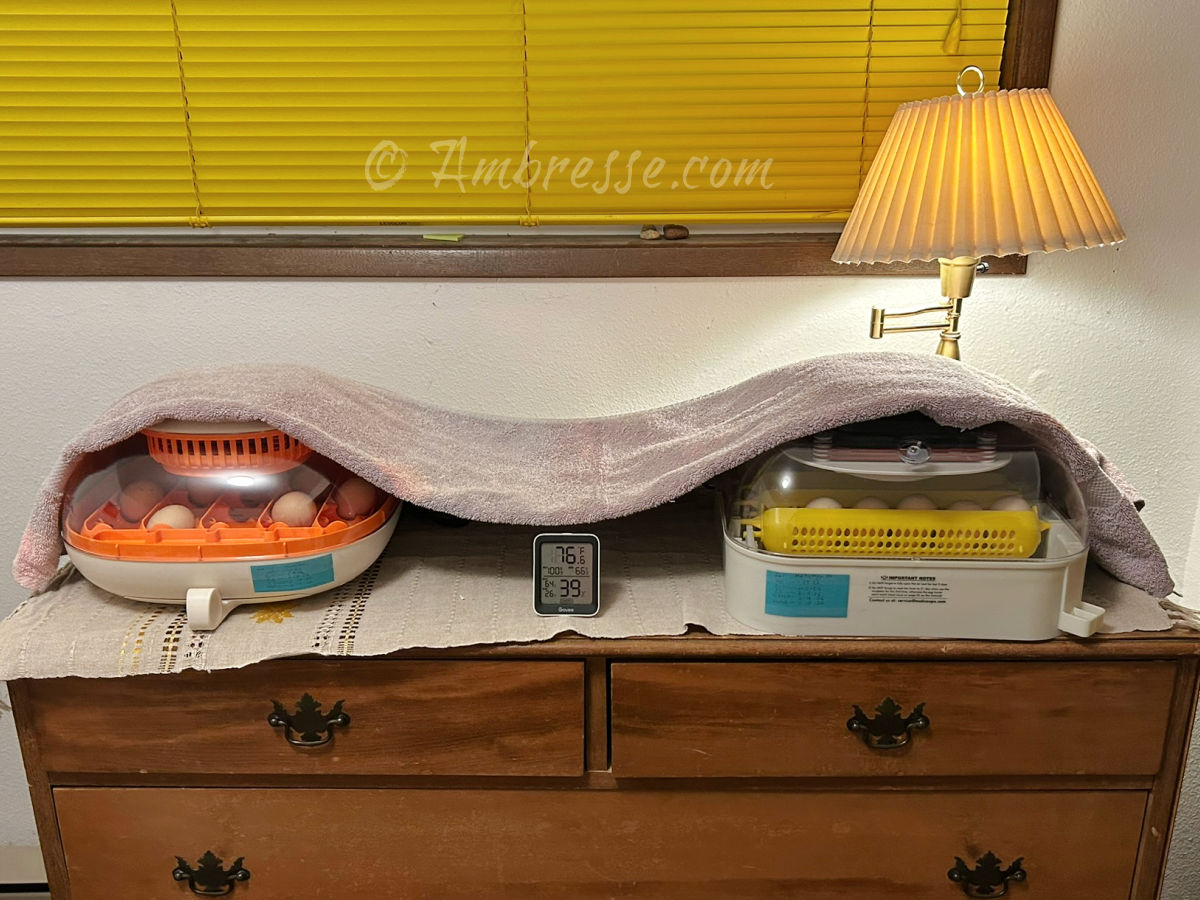
The Maticoopx 30 egg incubator is a tabletop incubator that holds up to 30 chicken eggs. The Maticoopx 20, logically, holds up to 20 chicken eggs, but is in every other way identical to the Maticoopx 30.
Both incubators (the 30, and the 20) boast automatic egg turning using a motorized tilt mechanism which tilts the eggs side to side on a pre-determined schedule.
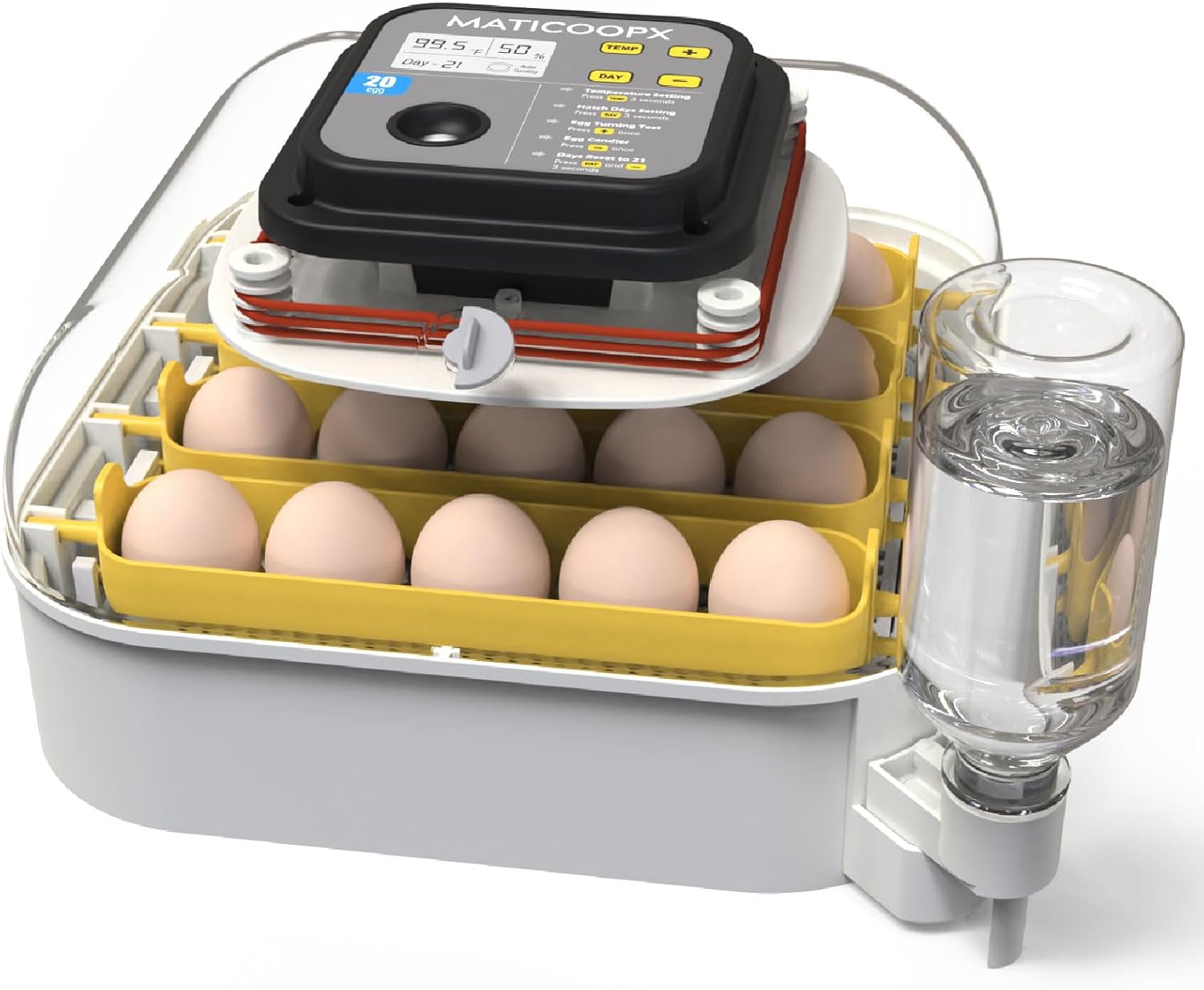
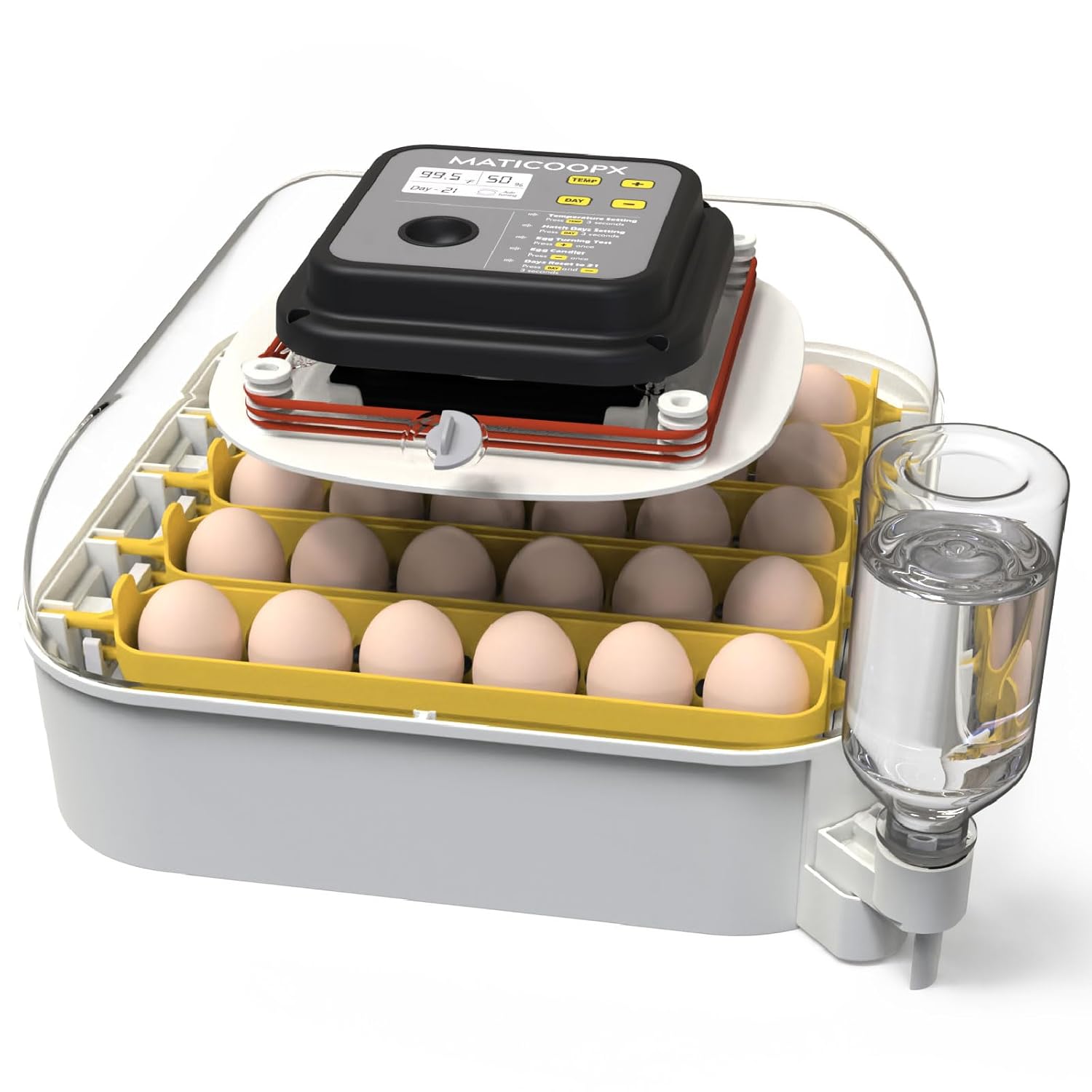
Temperature control is completely automated. The accuracy of the temperature is, of course, dependent upon the accuracy of the thermostat sensor. From online comments, it is clear that some Maticoopx 30 temperature sensors are not as accurately calibrated as others in the same make and model. This will actually be true of any brand of incubator with automated temperature control.
Note: My copy of the Maticoopx 30 needed the temperature adjusted upwards by 1.5 degrees Fahrenheit in order to register an internal temperature of 99.5 F and therefore achieve a decent hatch rate. It is now set at 101.0F (38.33C).
Humidity levels are not automated; they must be manually controlled via a balancing act between the amount of water in the humidity tank and the aperture of the air vent in the lid.
For the first 18 days, maintaining the first humidity tank full results in a humidity of around 53% - 54%. This can be mitigated somewhat (slightly reducing the humidity) by opening the air vent wider than half open.
Personally, I prefer a humidity under 50% for the early days, but what is most important are the results. With a hatch rate of 100% for the latest hatch in this incubator, I'm not complaining.
Ambresse Acres' First Review of the Maticoopx 30
First Hatch: After noticing the popularity of the Maticoopx 30, I purchased a used machine locally so I could put it through its paces. If I ended up loving the machine like it seemed many others did, I would consider including the incubator in my regular hatching schedule.
Early in the next hatching season, I loaded the Maticoopx 30 with 16 eggs. I let it do its thing without touching any controls. At each candling, more eggs had died. At the same time, a separate Brinsea Ovation 56 EX was scoring a 100% hatch rate.
When the hatch finished with 7 chicks out of 16, this was a bit of a bummer!
Ambresse Acres' Second Review of the Maticoopx 30
Later I realized I had failed to test the internal temperature of the Maticoopx 30. Using the info on this page, I was able to document the incubator's actual internal temp and reset the temperature control accordingly. That one adjustment made all the difference.
The outcome of the next test hatch was excellent - a 100% hatch rate. Works for me!
Hatching with a Maticoopx 30 Egg Incubator
What follows is a run-down of my experience using the Maticoopx 30 Egg Incubator.
I do highly recommend this incubator with the caveat - that you VERIFY the internal temperature of your copy of the Maticoopx. Your machine might be spot on, but you saw my experience - a 100% hatch vs. a 44% hatch, the only difference being adjusting the internal temperature of the Maticoopx 30.
Temperature
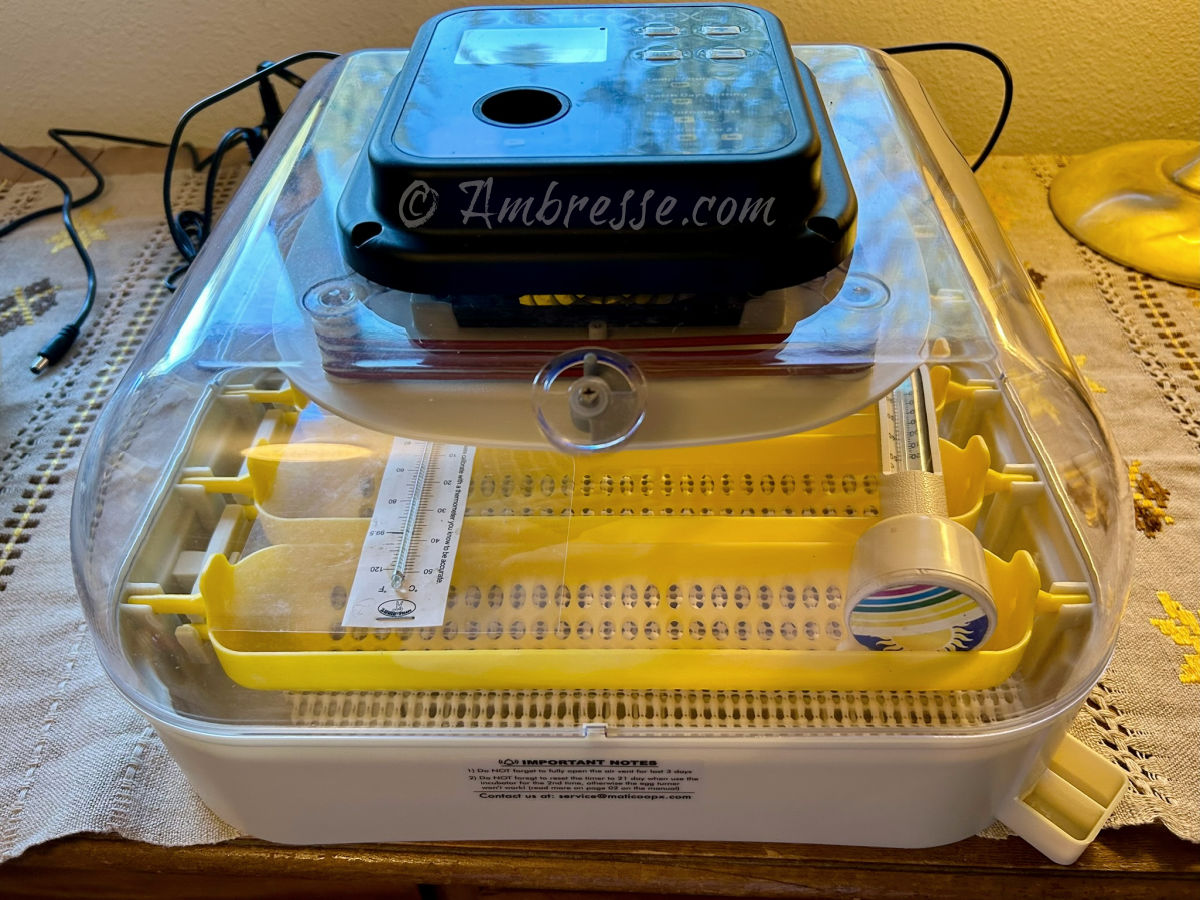
The thermostat for the Maticoopx 30 is pre-set to 99.5F which is ideal for chicken eggs. But measure the inside-the-incubator temperature for yourself. The instruction manual takes great pains to explain, and illustrate, how to verify the internal temperature/humidity.
Allow the incubator to get up to temperature and humidity, and then use at least two liquid (mercury) thermometers and a hygrometer or two (for measuring humidity). Once you know the actual inside temperature, you will be able to tweak the thermometer settings so that the actual temperature is close to 99.5 - 99.8F.
Humidity
The humidity controls are manual. That is, with a combination of the water level in the water reservoir and adjustments of the air vent opening, the design of the Maticoopx 30 is intended to ensure a humidity value between 50% and 55%, according to the incubator instructions.
Additionally, the air vent opening should be open an absolute minimum of 33% in order to permit the eggs to breathe sufficiently. Recommended opening is 50% for the first 18 days.
I live in the already damp Pacific Northwest not far from some of the wettest climates on the planet. So it turns out that on the North Olympic Peninsula where I live, the vent needs to be open more than 50% so that excess humidity in the incubator can escape. This may not be the case if you live in bone-dry climates such as Arizona.
Hydrogen Peroxide in the Incubator Water
The Problem: Twenty-one days of "warm and moist" inside any chicken egg incubator can result in the build up of pathogenic germs that can infect and kill chicken embryos. If you've hatched more than one or two clutches of chicks you may have noticed that the first couple hatches in the same incubator do well, and then the hatch percentages begin to seriously drop. The cause may be contamination of the eggs by bacteria.
There is a fix for this: Add 3% hydrogen peroxide to the incubator water.
Hydrogen peroxide kills germs through oxidation. It is also cheap. Add it to water at a ratio of approximately 1:5, more or less. For example, add 3 ounces of 3% hydrogen peroxide to 15 ounces of water, then pour from this mix into the incubator wells. This solution kills germs, preventing their build up in the warm and moist incubator environment.
If your experience is like mine, your hatch rate will return to 100%, or nearly so.
Loading the Eggs into the Maticoopx 30
The incubator instruction manual offers fairly clear guidelines, despite the butchering of the English grammar and spelling by foreign writers. Here's the general procedure:
- Fill water reservoir #1 with water (make that peroxide-water). It holds approximately 1/2 cup water. (Leave the cap on reservoir#2 until the eggs go into lockdown on day 18.)
- Verify the accuracy of the temperature sensor.
- Test the turner mechanism; instructions are in the incubator instructions. This involves ensuring the turner is plugged in, and pressing the "turner test" button.
- Load eggs.
Incubating with the Maticoopx 30 Egg Incubator
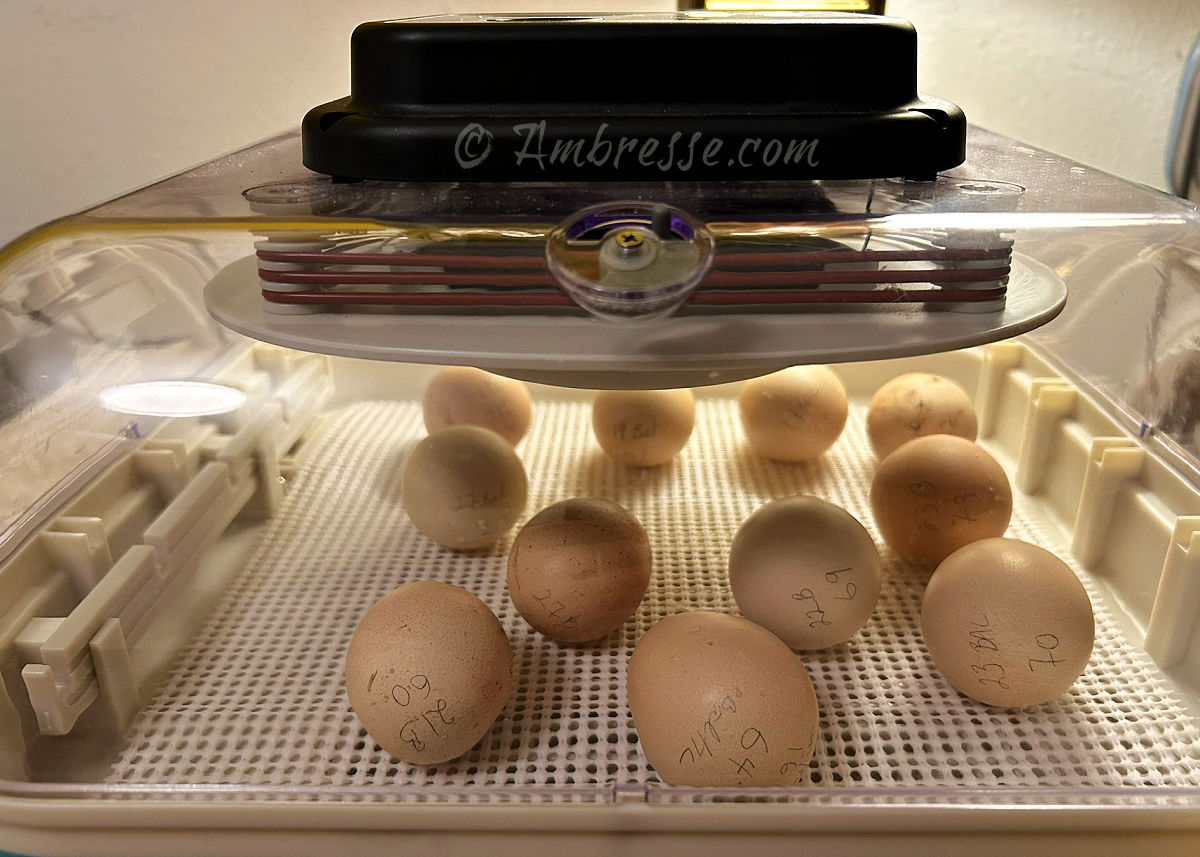
Incubating with the Maticoopx 30 Egg Incubator is easy and uncomplicated. Yes, it is only semi-automatic, but I found that stressing over humidity values over 50% was unnecessary.
I simply kept the #1 reservoir full by topping it off every morning and every evening. This seemed to me to be more consistent for the incubating eggs than constantly worrying or subjecting the eggs to fluctuations in humidity by failing to to keep the reservoir sufficiently full (or worse, allowing it to dry out).
If you're a chicken keeper that prefers to "dry-hatch," no worries! This incubator will let you do that, and I'm sure you will know exactly the operating parameters you will need.
The Hatch
Because humidity is manually maintained, and because every egg that hatches releases additional moisture into the incubator, keep one eye on humidity levels during the time of the actual hatch.
If humidity begins to creep above 75%, AND the vent is wide open, get creative - I open up a paper clip and slip one side of it between the base and the top. The idea is to prevent chicks from drowning inside their eggs from the excess moisture. A toothpick also works to wedge the top up very slightly, to allow humidity to escape without compromising the temperature.
Ambresse Acres' last hatch was 100%, which you already knew.
I really like using rubberized shelf liner on the bottom of the incubator, because that helps the chicks avoid feet and leg problems. They can stand and walk sooner. (Pictured below.)
The Maticoopx instruction manual recommends that you leave the "egg carrier link" - the white 'stick' that moves the trays - in place throughout the entire hatch. The reason is to keep debris out of the motor compartment. But I used plastic divider panels, which left no room. Instead, I used tape to cover the slot, and that worked very well.
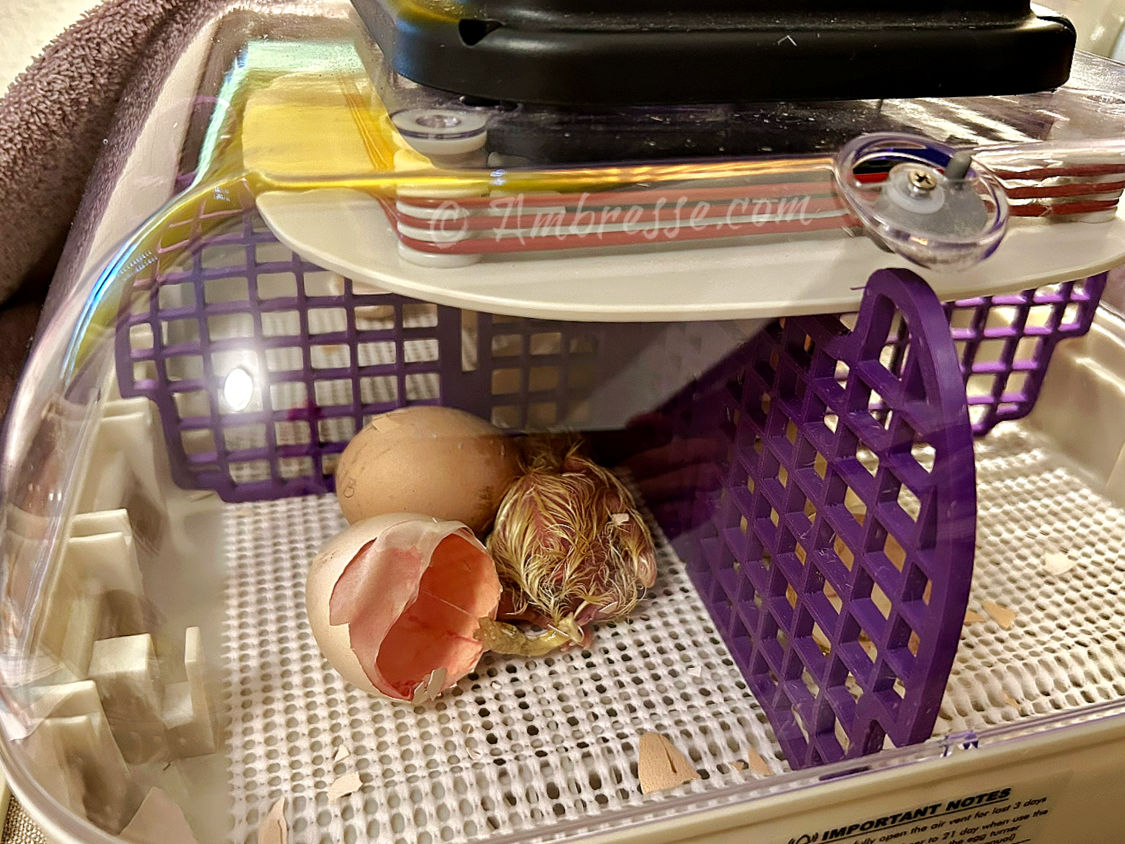
Above: The purple dividers inside the Maticoopx were perfect! Since Ambresse Acres has several genetic flocks; compartmentalized hatching made life much simpler.
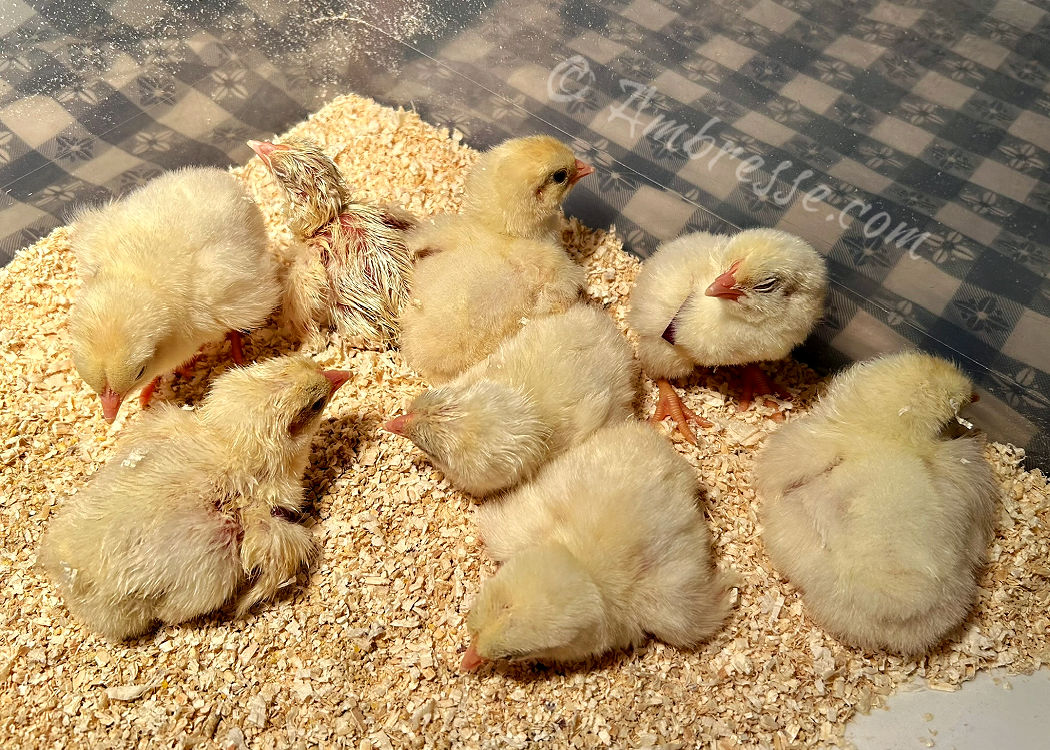
Below: Pictured are the first few hatchlings fresh out of the Maticoopx 30. Each has already been weighed and fitted with permanent wing bands.
From Hatch to Brooder
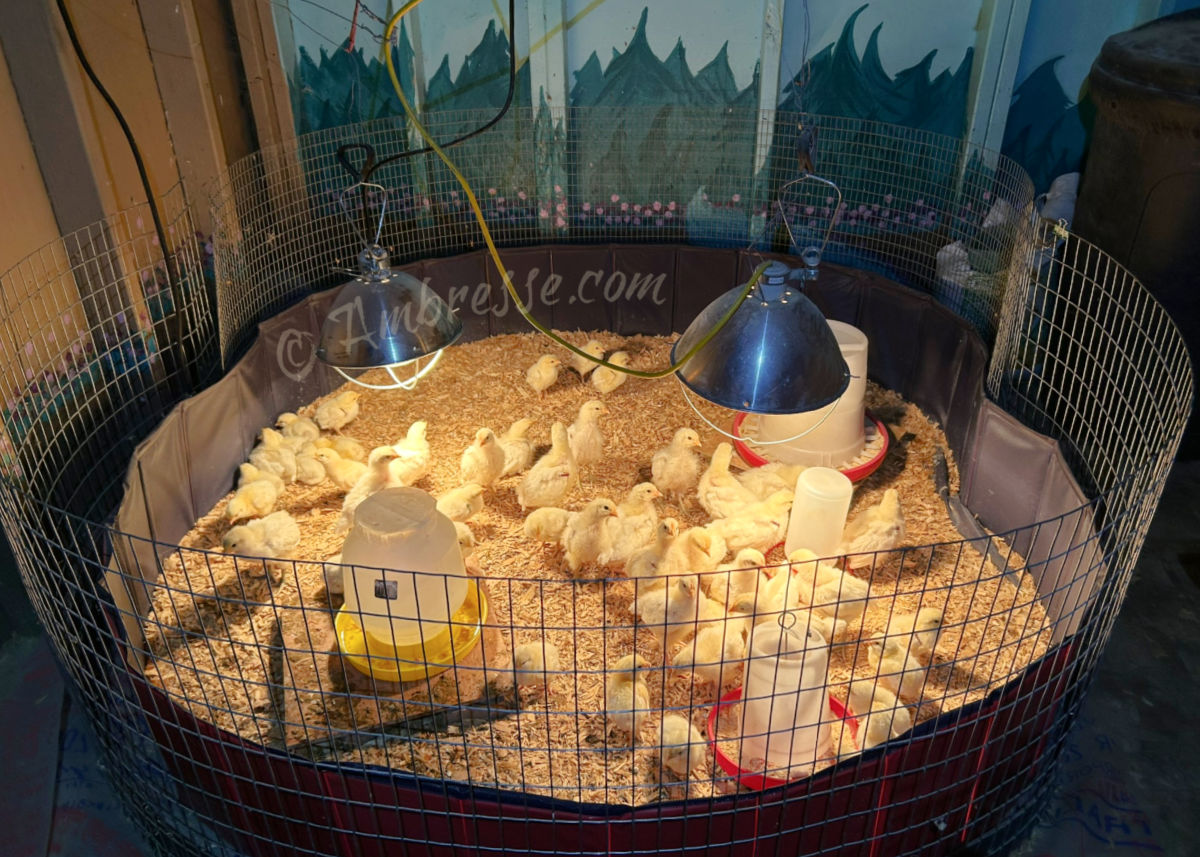
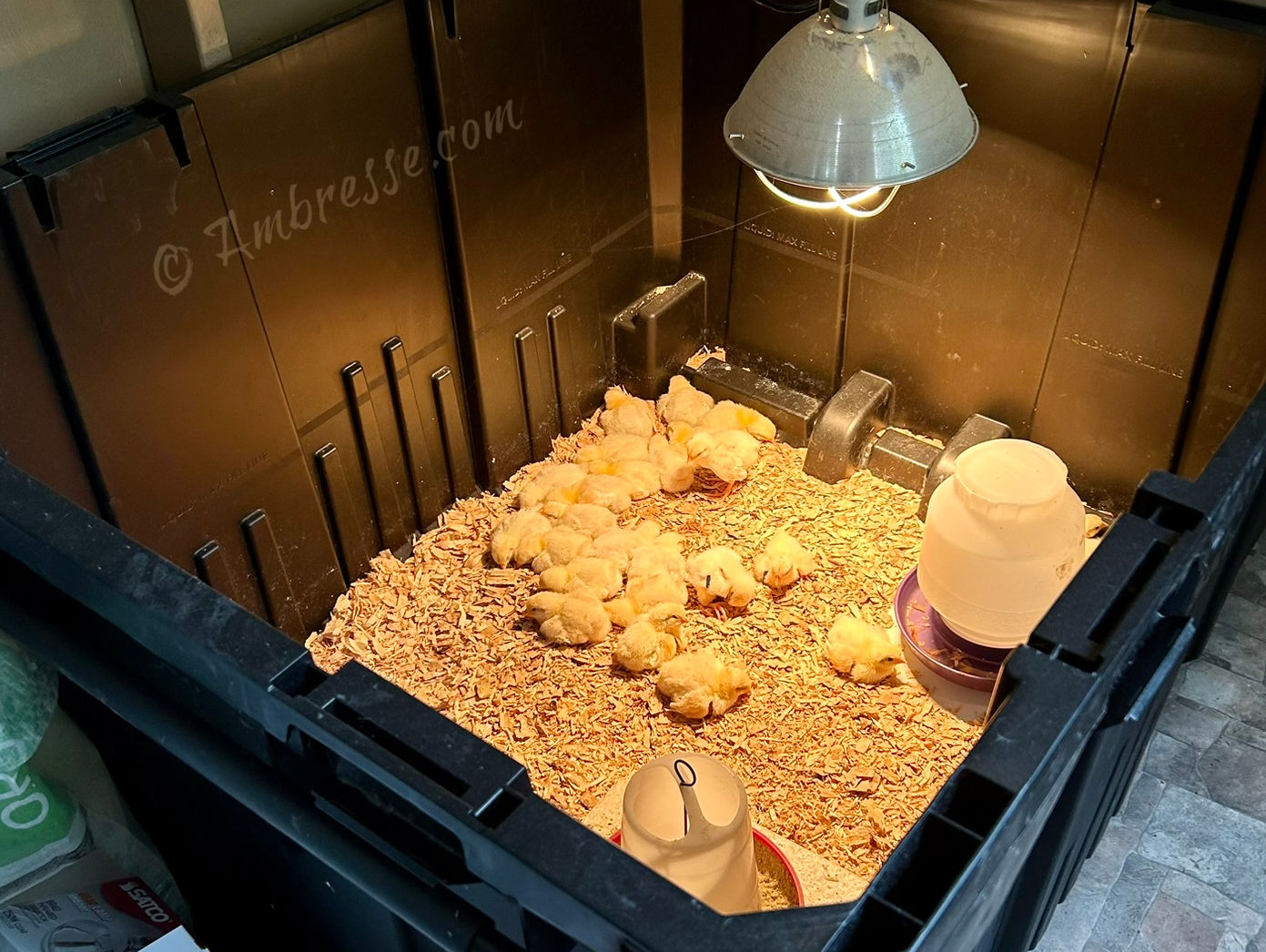
At Ambresse Acres, we're kind of low-tech. A plastic bin placed nearby serves as a brooder for the 24 - 30 hours it typically takes for the hatch to complete. (Pictured above.) Once all eggs have hatched, we move the chicks to a large brooder bin or animal pool in an outside brooder room. (Pictured below.)
Yes, I still use heat lamps - but I secure them six ways to Sunday to ensure that they stay suspended. And yes, my hyper-caution is a result of near-tragedy miraculously averted.
Cleaning the Maticoopx 30 Egg Incubator
Clean the Base
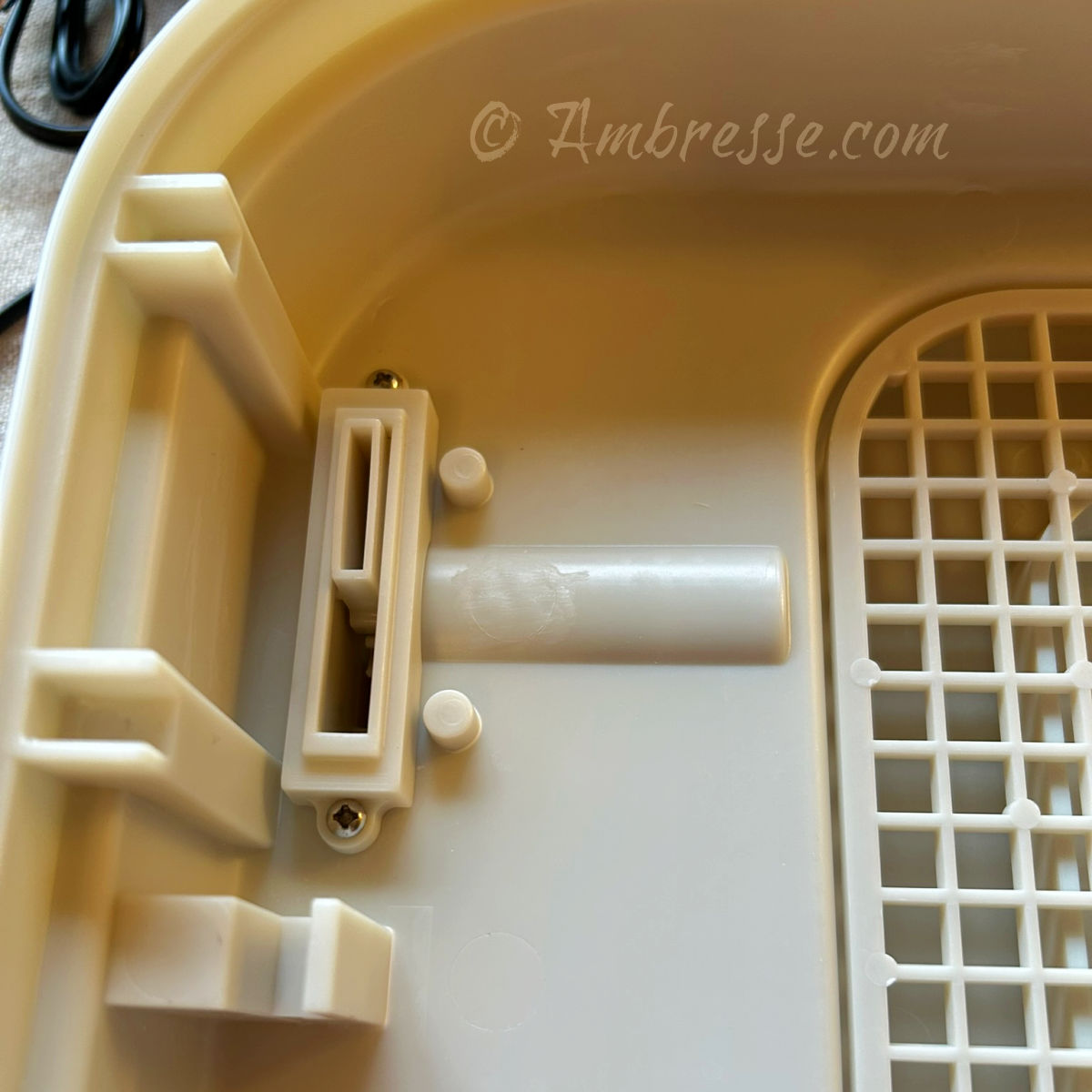
You can just wipe everything down with a weak bleach solution. This will work for a few hatches, but eventually you will be best served to remove the electric components from the base so the pieces can be properly washed. It's easy to do - simply remove a few screws.
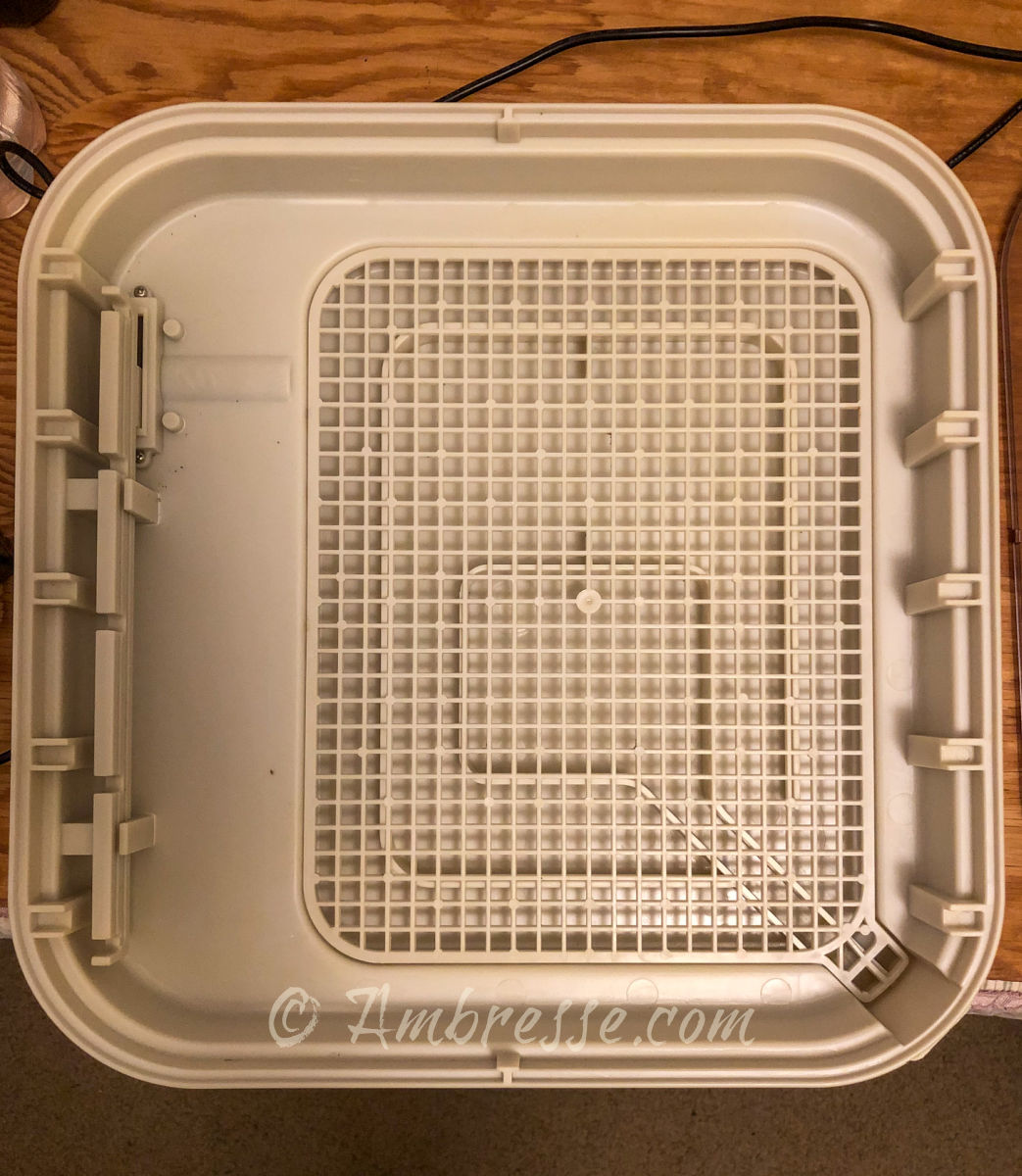
On the inside of the incubator, the slot that accepts the "egg carrier link" (pictured here) does NOT need to be removed. Leave it all intact.
Turn the incubator over. Remove the base by removing its 4 small screws. This will reveal the motor housing.
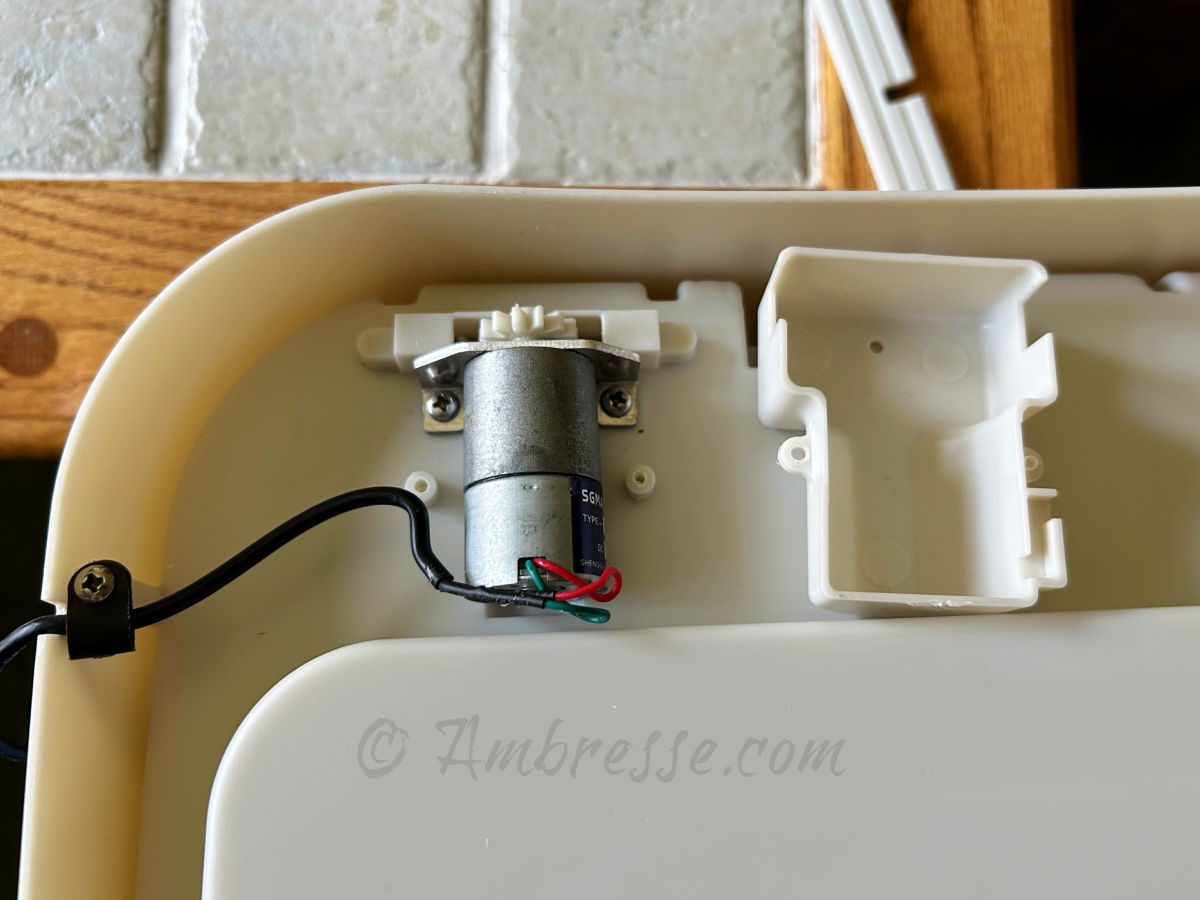
Remove the two screws of the motor housing. Under the housing is the motor. Remove the motor by removing its two screws. Remove the one screw securing the cord to the base. (Pictured here.)
You will have removed a total of nine small screws.
Set aside the electrical components - motor and electrical cord. At this point, the entire base can be thoroughly cleansed in soapy water in the sink. Easy peasy.
Clean the Top of the Incubator
The top of the incubator houses all the electronic components, like the temperature thermostat, and the hygrometer that measures the humidity. None of this should get wet!
For that reason, I simply wipe down the clear plastic top and the fan housing with a wash rag dampened with warm water splashed with a smidgeon of bleach. Remove any dust, down, and dander. No need to rinse.
Reassemble the Maticoopx Incubator
Reverse the process:
- Reinstall the electric motor and its casing
- Reinstall the bottom plate of the incubator
- Turn the bottom right side up and replace the water tank cover
- Replace the turner coupling arm
- Optional but recommended: Add a cut-to-size piece of rubber cupboard liner covering the whole bottom of the incubator.
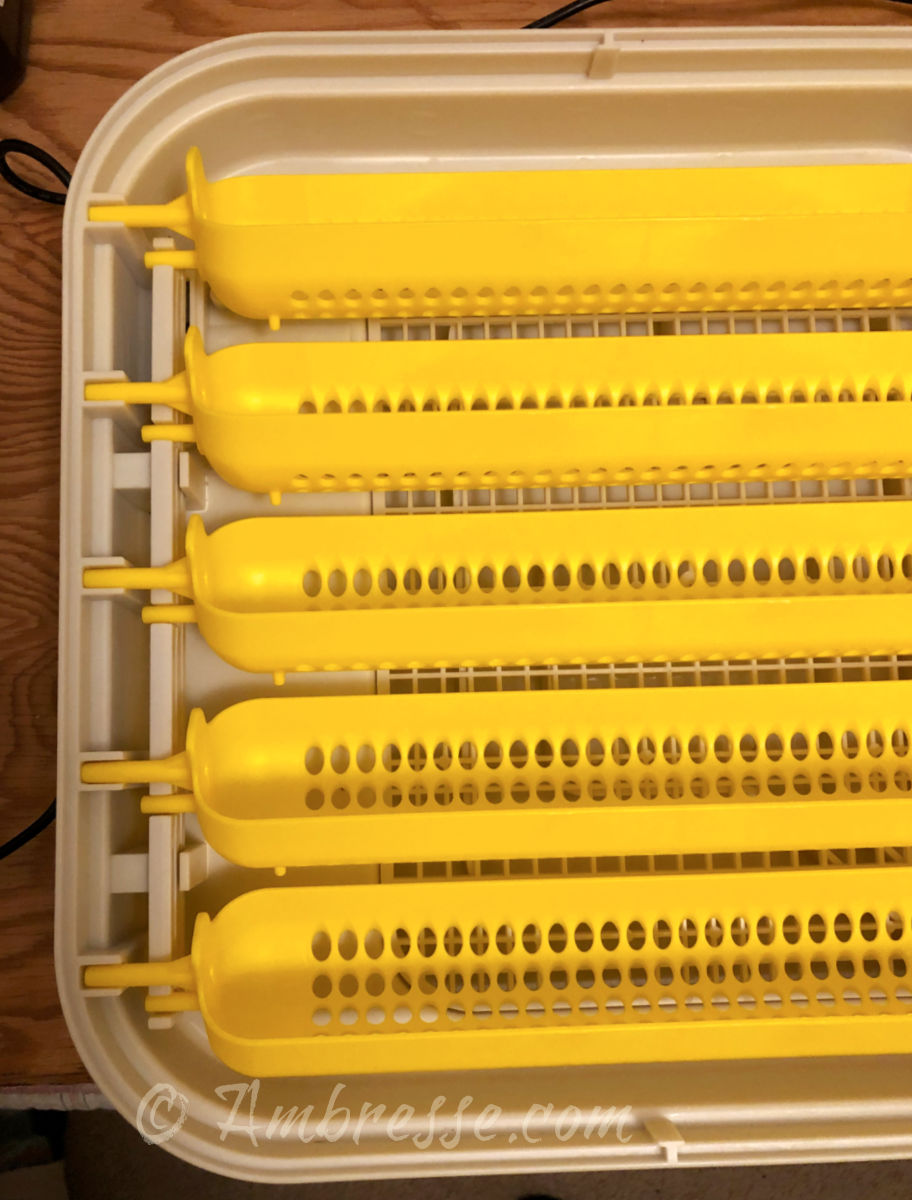
- Reinstall the yellow egg turner trays
Maticoopx 30 Review on BackyardChickens.com
Click the link for a Maticoopx 30 review on BackyardChickens.com.
Get a Maticoopx 30 Egg
Incubator
Maticoopx sells nearly exclusively via Amazon:
- Get a Maticoopx 30 Egg Incubator at Amazon.com (ad)
- Get a Maticoopx 20 Egg Incubator at Amazon.com (ad)
- FB Marketplace or other marketing avenue such as eBay.
More Info about Maticoopx Incubators
Facebook: Maticoopx FB Group
You can actually get a lot of info from chicken owners that hatch with a Maticoopx 20 or 30.
Website: https://thematicoopx.com/
Maticoopx incubator parts: https://incubatorwarehouse.com/
Alternatively, search Amazon with the term "Maticoopx incubator parts"
Maticoopx incubator accessories: https://www.etsy.com/shop/CourdtCreations
Nurture Right 360 - Another Tabletop Incubator
Check out our review of the Nurture Right 360 Incubator!
American Bresse Chickens are not yet accredited by the American Poultry Association, but breeders have an eye on the process. Consider a membership in the APA.
Overheard...
Tasty Recipe! "I processed my first batch of Bresse... Today I roasted one according (somewhat) to the recipe posted on Ambresse. It was delicious! Tender, moist and succulent... So happy I chose this breed!" (B.E., MN, 12/11/2024).
Success: "I can't believe all the inquiries we get through your website. And it's been a great resource to send people to who are interested in the (AB) breed" (Utangard Farm, NH, 5/5/2025).
Informational: "Your site has the first accurate information about American Bresse chickens that I have seen in English. Thanks for your diligent work" (L. Wooton, NC, 12/17/2024).
Overheard...
"I processed my first batch of Bresse... Today I roasted one according (somewhat) to the recipe posted on Ambresse. It was delicious! Tender, moist and succulent... So happy I chose this breed! (B.E., MN, 12/11/2024).
"Your site has the first accurate information about American Bresse chickens that I have seen in English. Thanks for your diligent work" (L. Wooton, NC, 12/17/2024).
Our Local Partner

Hope Rising Microgreens grows and supplies ultra-fresh nutritious microgreens to the communities on the North Olympic Peninsula in WA.
Translate This Page
Traduire Cette Page
Traduzca Esta Pagina

News
August 2026:
The American Bresse Club is taking shape! The linked website is in beta mode; would you like more info or to help test its functions? Yes? Click the link above. (Beta testing is free!)
For now, Ambresse is still hosting the American Bresse Club web pages (linked here and on the navigation bar).
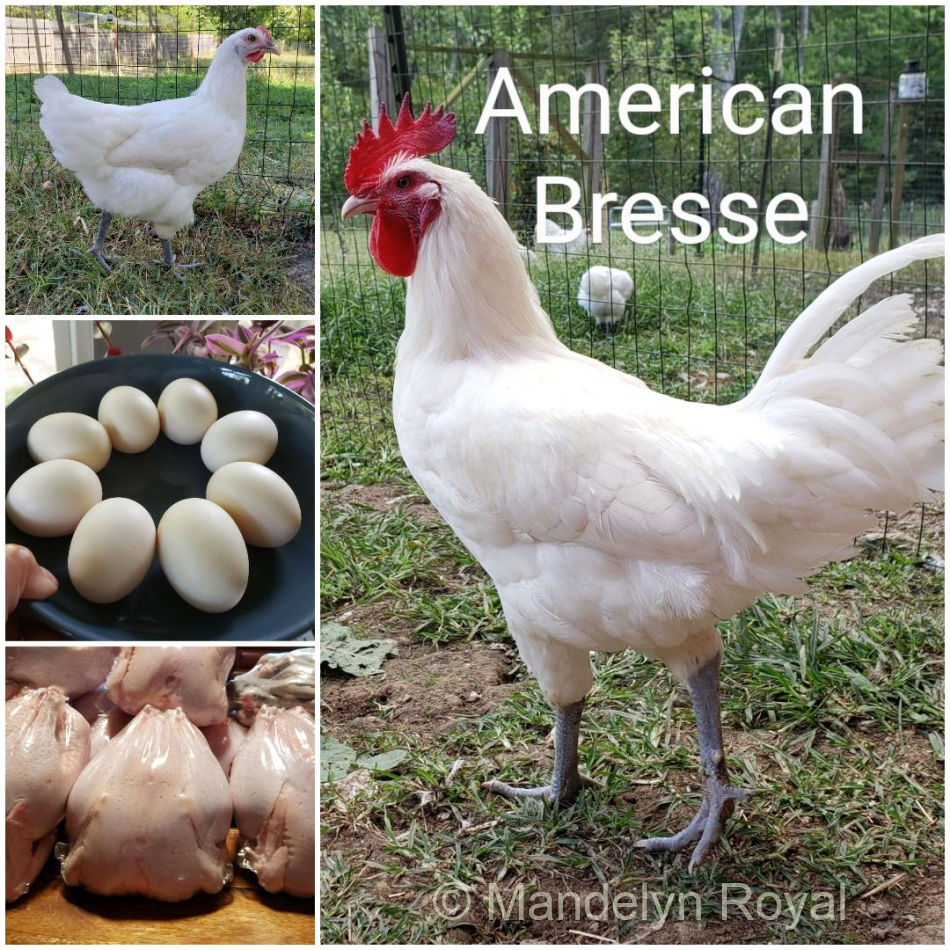
Photo credit: Mandelyn Royal.
Copyright © 2021-2026 Ambresse.com. All rights reserved.
403 S. Lincoln St., Suite 4, PMB 5, Port Angeles, WA 98362-3025
Privacy Policy | Disclaimer | Ambresse Acres | About Ambresse.com | Contact Us | Website Map

This website focuses on the American Bresse Chicken, along with other chicken-related topics. Due to the protections given by France to the Bresse breed, it is important to consistently differentiate when necessary between the Bresse chicken breed of France and North American chickens of direct French Bresse descent. For this reason, we call them American Bresse chickens, repetitively, throughout the website. You might notice that this can start to feel clunky at times. So, in order to write more fluidly, we also use a couple contracted terms to reference American Bresse chickens: “Am Bresse,” or ABC (American Bresse Chickens). Our keystrokes spell out ABC or Am Bresse, but our heads see American Bresse. We hope you will see the same.